Applic AI

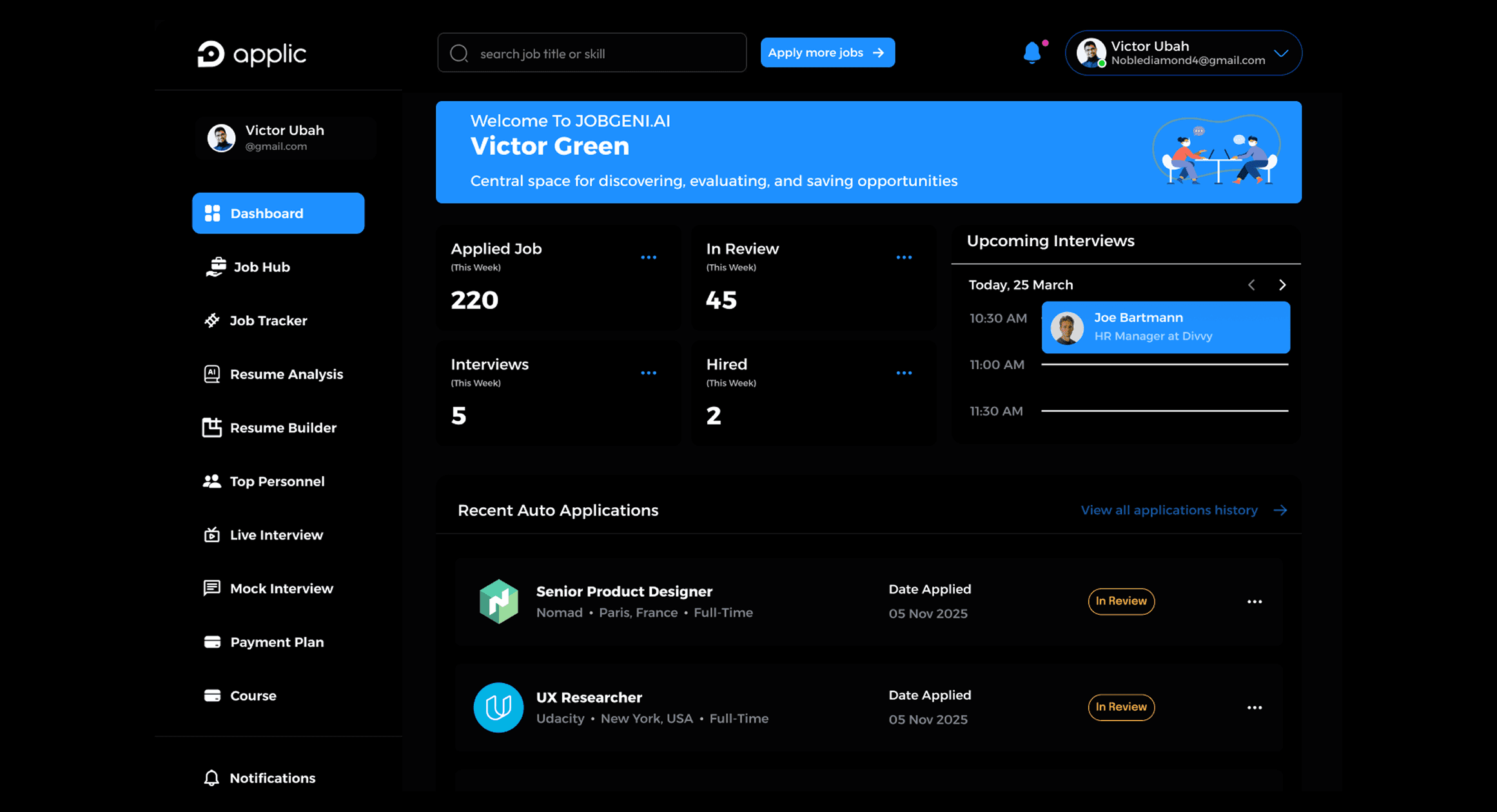
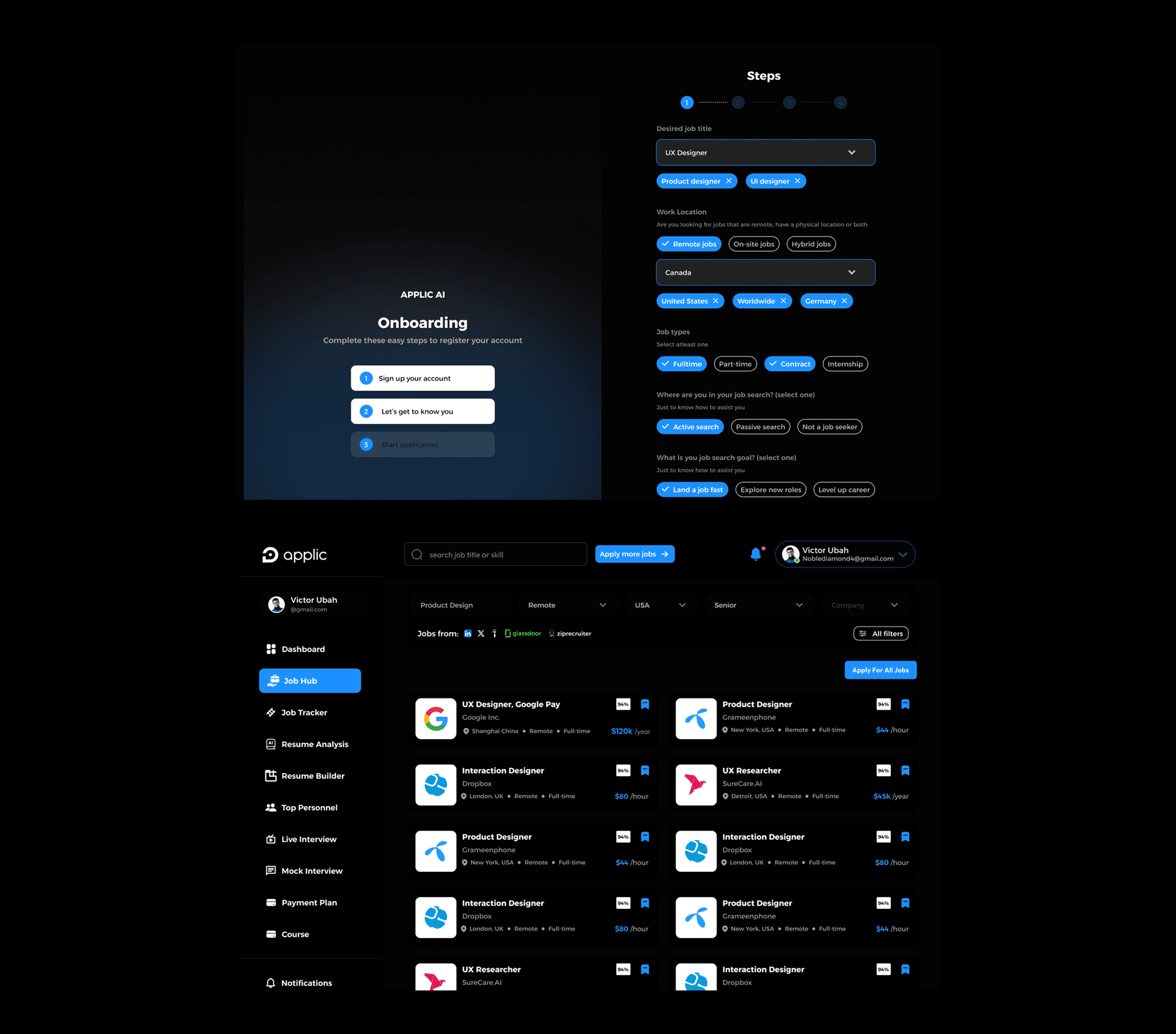
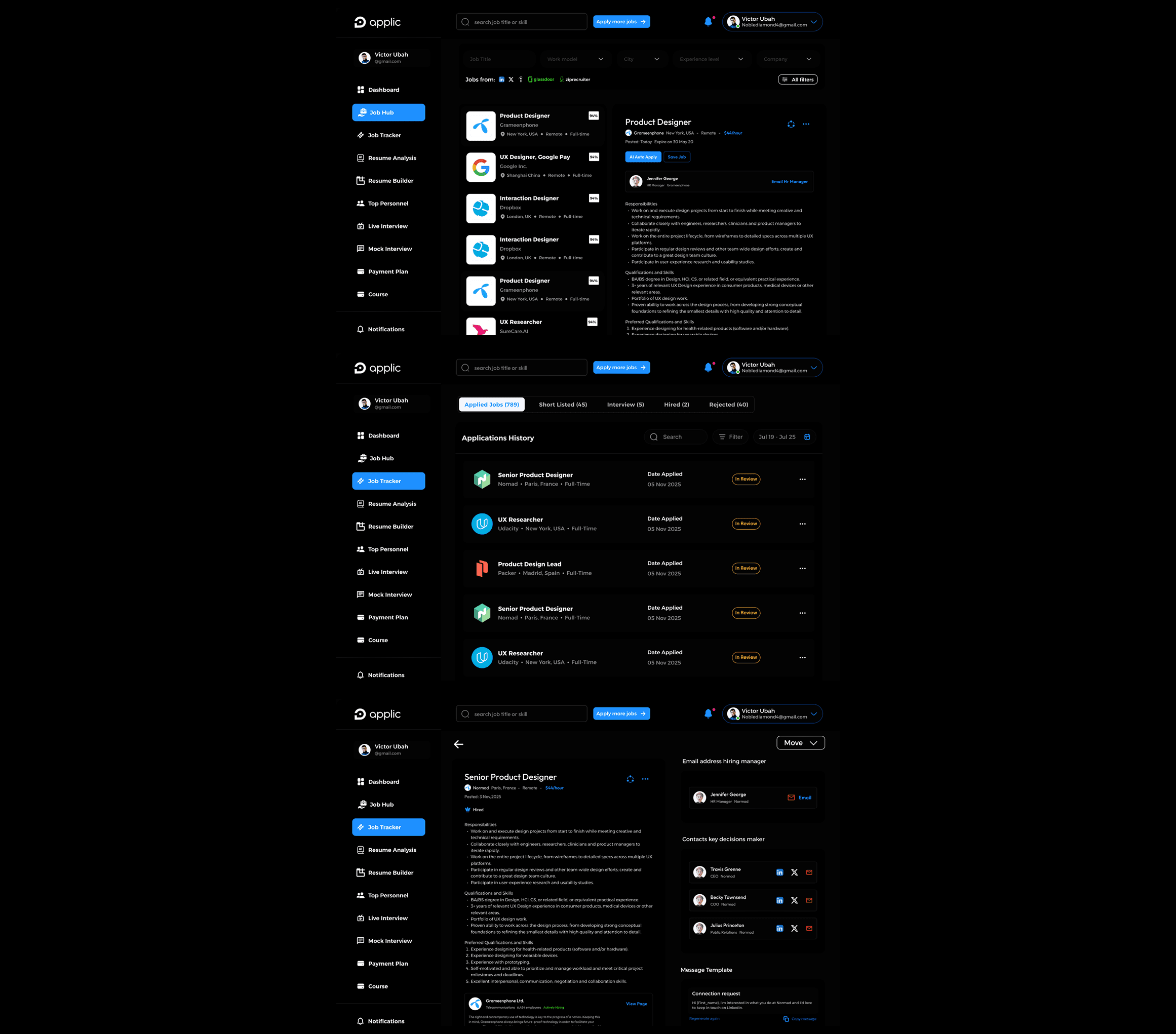
Applic AI is a job application tool that does the applying for you. You give it your profile once, and it searches for roles that fit, tailors your resume and cover letter to each one, and submits the applications on your behalf, up to a few thousand a month. It also tracks where everything stands, sends follow-up emails, and helps you prepare for interviews.
The point isn't just that it saves you time typing. It's that job hunting eats the hours you'd otherwise spend getting ready for the interviews you actually want, so the tool handles the volume and gives that time back to you.
The problem everyone gets wrong
Job hunting eats the hours you need to prepare for the interviews it gets you.
The obvious framing is that job applications take too long. True, but shallow. It leads you to build a faster form-filler.
Our interviews pointed somewhere more useful. Candidates weren't only losing time. They were losing the right time. People described applying to dozens of roles a week, then walking into interviews unprepared, because every hour spent tailoring a resume was an hour not spent researching the company. Several said the search had swallowed the rest of their lives. Applying had become the job, and it was crowding out the part that actually decides whether you get hired.
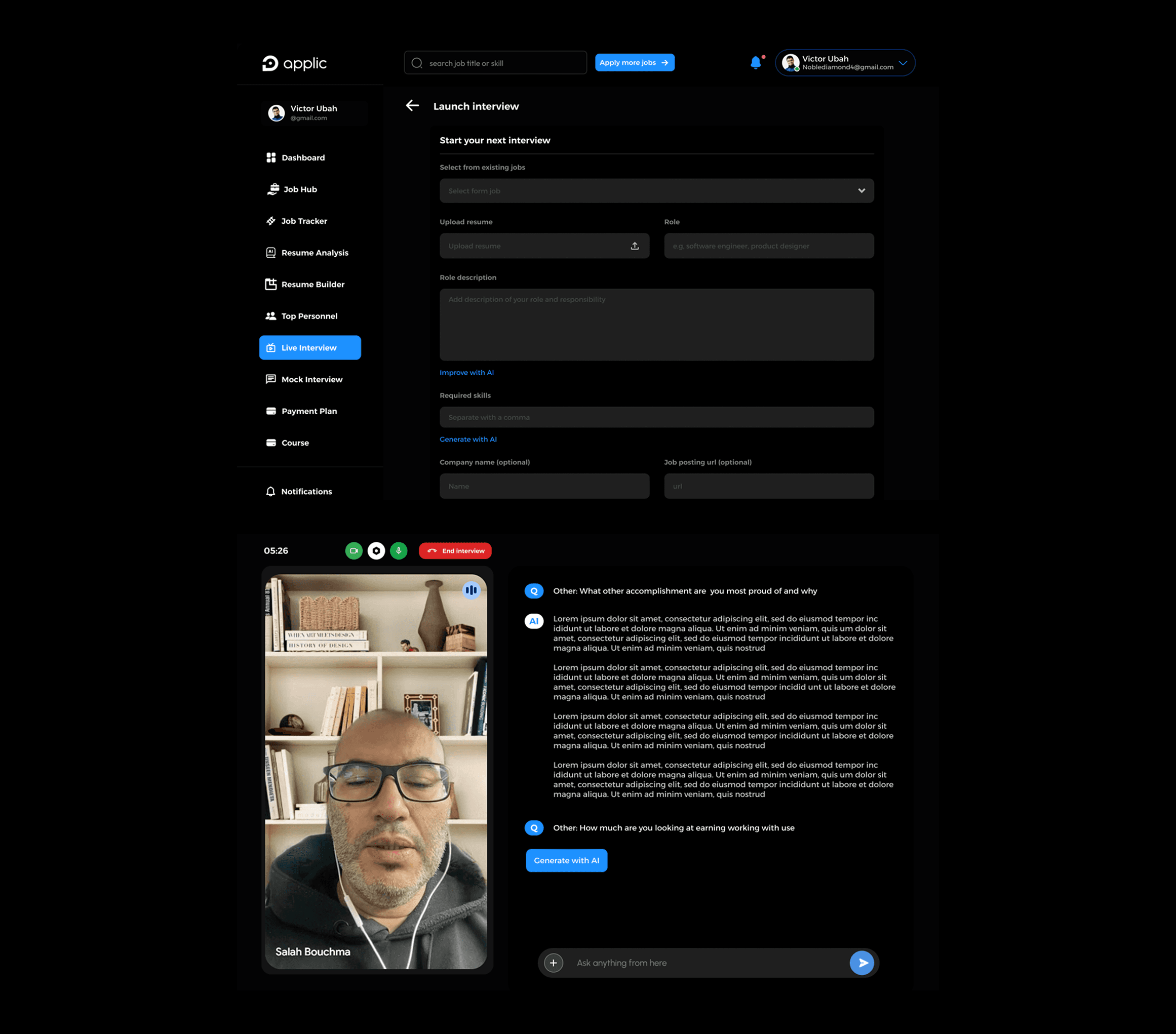
That reframed the brief. The product couldn't just save clicks. It had to give people their attention back and point it at the stage where outcomes are decided. That is why Applic AI doesn't stop at auto-apply. It carries through to follow-ups, networking, and live interview support, because automating the application is only worth it if the freed time goes somewhere.
The hard part
Trust was the ceiling. However good the automation got, people would only use as much of it as they dared.
Auto-apply is straightforward to build. It is very hard to get someone to switch on. We were asking people to let software apply to real jobs, under their real name, to real employers, without watching it happen. Three fears came up again and again.
Wrong roles | “What if it applies to things I'd never actually take?” |
Wrong words | Generic or inaccurate content going out with their name attached. |
No second shot | Burning a company they cared about with one bad application. |
D E C I S I O N 0 1
Where to put the human
We chose batch review. The AI prepares everything, you approve the whole set in one pass.
This was the central call, and it's a spectrum, not a binary.
At one end, full autonomy. The AI searches, matches, tailors and submits with no checkpoint. Maximum time saved, maximum risk, no recourse when it goes wrong.
At the other, per-application approval. The user reviews every submission. Safe, legible, and self-defeating. It rebuilds the manual work the product exists to remove.
We landed in between. The AI handles searching, matching and tailoring, then queues a batch. The user approves the set in a single pass before anything is sent.
It works because the cost of oversight stays flat as volume grows. One decision covers many applications, so reviewing 40 costs about what reviewing four costs, and the user keeps a real veto. It buys back the time without asking for blind faith.
The tradeoff, honestly
It isn't hands-off. A segment of users want zero-touch automation and batch review gives them a chore, however small. This model is still evolving, the direction I'd argue for is treating autonomy as a dial the user earns confidence into over time, rather than a fixed setting decided for everyone at onboarding.
D E C I S I O N 0 2
Making the match legible
We stopped showing the AI's confidence and started showing its reasoning.
The matching engine weighs 47 data points per role. No one can meaningfully assess 47 of anything, and showing a bare score just moves the black box. It tells you the AI is confident without telling you why, which is the exact thing users said they couldn't trust.
So we surfaced the two or three factors that actually drove the match, in the user's own language, at the moment of review. Users don't need the model's full working. They need enough to disagree with it.
That's the difference between a system that asks to be believed and one that can be checked. Explainability wasn't a compliance box here. It was how someone decides to let go.
D E C I S I O N 0 3
Designing the failure
Trust is built in the failure path, not the happy one.
Most AI product design assumes things go right. We had to answer what happens when the system applies to something it shouldn't have, or sends words the user wouldn't have written.
Scale as an information problem
At 3,000 applications a month the tracker stops being a list and becomes an orientation problem.
Someone opening the dashboard doesn't want to read a hundred rows. They want to know, in about three seconds, what needs them right now
Reflection
Batch review was the right call. Settling it in a design review instead of a prototype was not.
I'd defend the decision itself. It was the only option that kept both the time saving and the veto.
What I'd change is how we got there. We reasoned our way to it in a design review, when we could have prototyped two or three points on the spectrum and put them in front of the interview participants we already had. People can't tell you how much control they'd hand over. You have to watch them do it. We'd have reached the same answer with evidence behind it, and probably found the dial idea months earlier.

Conclusion
Applic AI launched with the full loop intact, matching, batch review, submission, tracking, follow-up, and the preparation tools the freed time is meant to feed. The trust problem that set the ceiling didn't get solved so much as made negotiable. Batch review gave people a veto cheap enough that they'd keep using it, and explainable matching gave them enough information to actually exercise it.
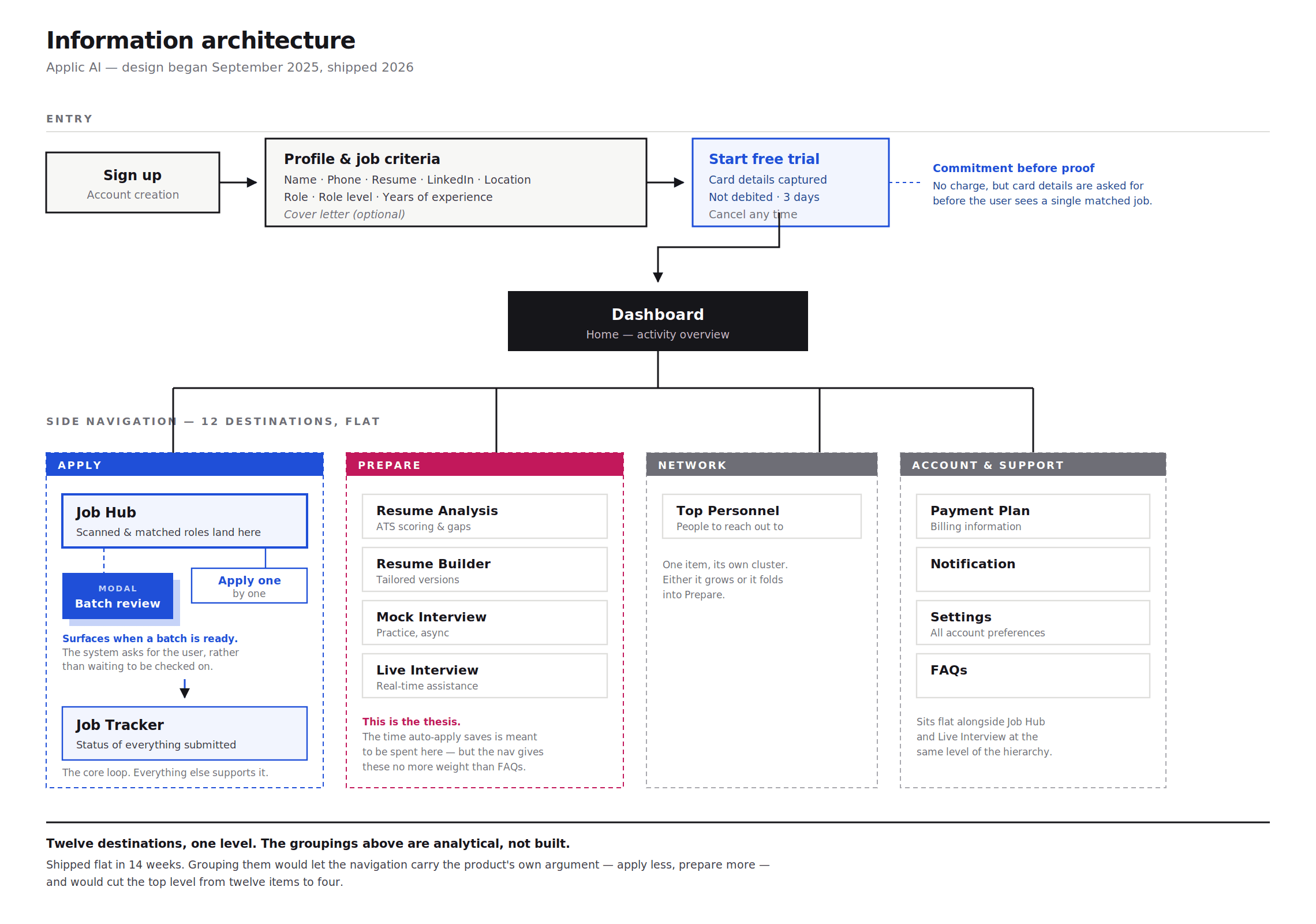
The open question is whether the preparation tools get used. That's the real test of the thesis. If people save the hours and don't spend them preparing, then the product saved clicks after all, and the answer would be in the navigation, not the automation.

