Urbex Africa
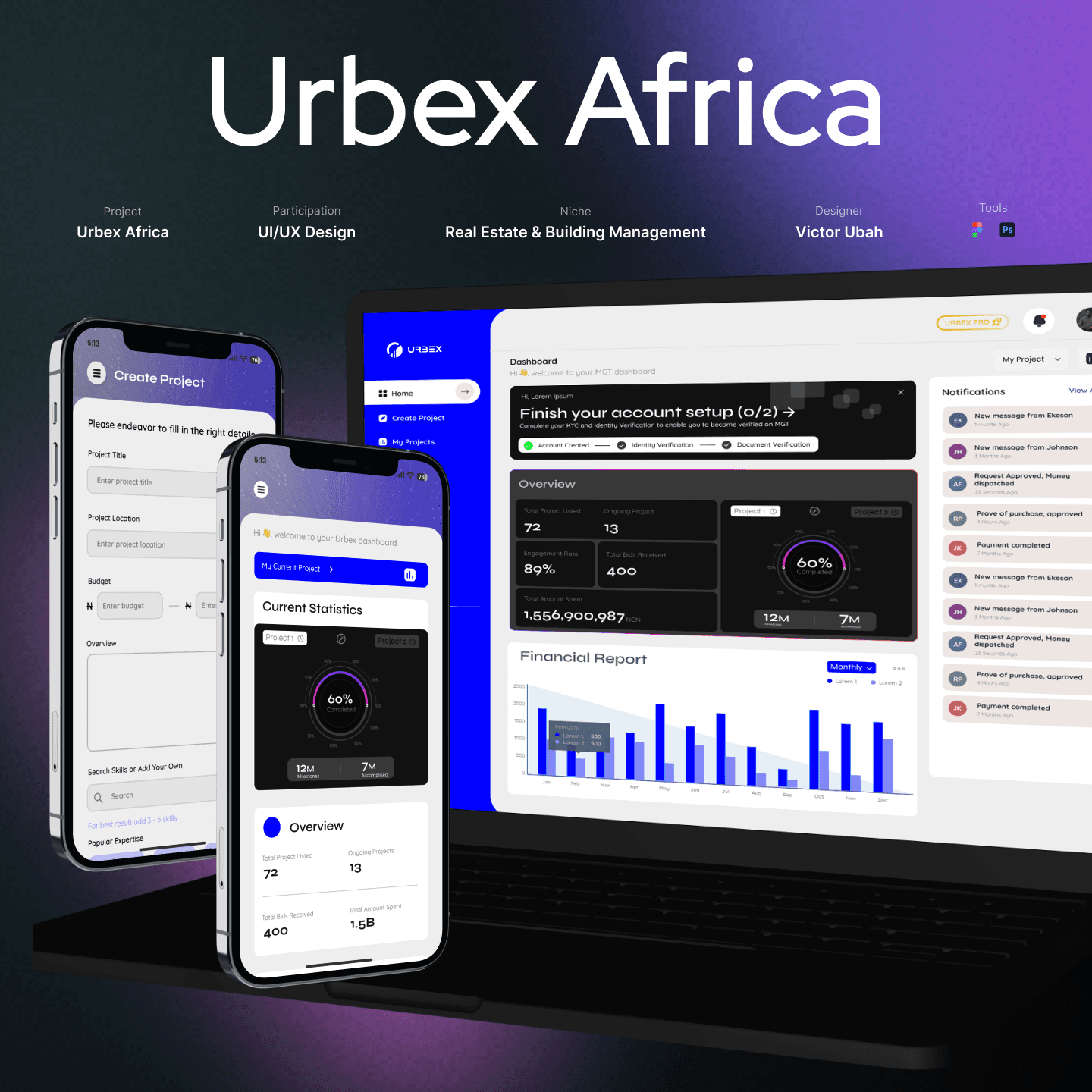
Urbex Afrika connects property owners with verified contractors, architects, engineers and suppliers, and then runs the project itself plans, milestones, site supervision, and evidence-gated payments in one place. It was built for a specific situation: funding construction from a distance, where the person paying cannot walk onto the site.
The problem
People send money home for years, then come back to bare land.
The story repeats across the continent. Someone working abroad sends money home to a sibling, a cousin, a trusted friend, to build a house. It goes out monthly for years. They picture a foundation, then walls, then a roof. They come home and find nothing, or a shell, or something so far from what they paid for that the money is simply gone.
Not always theft. Sometimes drift, funds absorbed by an emergency, a contractor who vanished, a project quietly abandoned and never reported. The common factor is that the person paying had no way to see anything, and nobody was accountable for telling them the truth.
Interviews surfaced the same pattern from the other side. Contractors lived on referrals, had no way to prove past work, and watched clients disappear after quotations. Everything ran on WhatsApp, phone calls and physical visits, which works only when you can physically visit.
So the design problem was not “how do we help people hire a contractor?” It was “how does someone four thousand miles away know that a bag of cement was actually bought?”
THE RELEASE CHAIN
No money moves without evidence
Six gates between a funder's account and a supplier's hand. Every one of them has to open before the next exists.
The core of the product is not the marketplace. It is a chain of custody for money and for truth, designed so that the person paying stays in control of every disbursement without having to be present for any of them.
01 | Plan | Documented scope, drawings, site |
|---|---|---|
02 | Fund | Money held, not handed over |
03 | Request | Supervisor asks for a specific purchase |
04 | Evidence | Photographic proof from site |
05 | Approve | Funder signs before release |
06 | Oversee |
PLAN
Locked until documented
Nothing starts without a plan on file
A project exists in the system only once there is a scope, drawings and a site.
The client brings what they want built, the plans, and the land. That becomes the reference every later request is measured against. Without it there is nothing to hold anyone to, and the reason money drifts in informal builds is that there was never an agreed definition of what was being paid for.
PROOF
Locked until evidenced
Follow one bag of cement
The site supervisor requests. The site sends proof. The funder releases. In that order, every time.
A site supervisor is assigned to every full-scale project. When materials are needed, the supervisor raises a request against the plan, this quantity, this purpose, this cost. Nothing is released on the request alone.
Photographic evidence comes back from the site, tied to the request. Then, and only then, the person funding the project signs off and the money moves.
Designing at that granularity was the decision that mattered. Escrow released against broad milestones would have left the same gap the product exists to close, because a milestone can be claimed and a bag of cement cannot.
WATCH
Who watches the watcher
Supervising the supervisors
A site supervisor solves the distance problem and creates a new one.
Putting a person on site fixes the funder's blindness, and immediately raises the obvious question, what stops the supervisor becoming the new version of the cousin who spent the money? Urbex operates a general supervisor above the site supervisors, moving between projects. The design assumption is that no single point of trust holds, so the platform layers oversight rather than relying on any one role's honesty.
What the chain required elsewhere
Verification, workspaces and milestones are not marketplace features here. They are what makes remote control possible.
Anonymous listings were removed entirely: Verification badges, business licences and reviewed portfolios instead. Research was unambiguous that verification mattered more than price, and for a client who cannot meet anyone in person, an unverified profile is worth nothing.
Portfolios show proof, not claims: Completed projects, before-and-after images, reviews, years of experience, certifications. People hire evidence.
Project workspaces replaced the WhatsApp thread: Messages, files, milestones, tasks, payments and updates in one place, because a conversation scattered across three apps cannot be audited by someone who joined it late or lives in another time zone.
Milestones replaced “started” and “finished.”: Foundation, framing, roofing, plumbing, finishing. Granularity is what lets a distant client answer the only questions they really have: is this on schedule, and why is the budget moving?
Seven user types, one product
Property owners, contractors, architects, engineers, artisans, suppliers, project managers.
Each needs a different workflow and none should feel they are using a different product. The test I applied to every screen was a single question, and it was not an abstract one for the people we interviewed: would I trust this person with a fifty million naira project?
Reflection
The strongest work here came from realising the product was not a marketplace with payments attached. It was a trust system that happened to need a marketplace at the front. That reframing changed what mattered, granularity of evidence over breadth of listings, and oversight structure over feature count.

